Breast Cancer

Are You Missing These Early Warning Signs?
Would you recognise the early warning signs of breast cancer? A lump may be the most familiar symptom, but it is not the only change worth paying attention to.

Knowing what is normal for your breasts, understanding when to seek medical advice and knowing what happens during breast cancer screening can make a difference.

This Pink October, Mediplus is helping women in Mozambique take a more informed approach to breast health. From recognising unusual changes to understanding mammograms and abnormal results, here is what you need to know.

What Are the Early Warning Signs of Breast Cancer?

  • Changes in breast size or shape – Unexplained changes, shrinkage, or asymmetry where one breast looks or feels different than usual.
 
  • A new lump or thickening in the breast or underarm – Look out for any new lump, swelling or unusual thickening in the breast, upper chest or armpit area. Breast cancer lumps can feel hard or soft, may be painful or painless, and can vary in size.
 
  • Skin dimpling, redness or other unusual skin changes – Look out for any new lump, swelling or unusual thickening in the breast, upper chest or armpit area. Breast cancer lumps can feel hard or soft, may be painful or painless, and can vary in size.
 
  • Changes to the nipple – Look out for any new lump, swelling or unusual thickening in the breast, upper chest or armpit area. Breast cancer lumps can feel hard or soft, may be painful or painless, and can vary in size.
 
  • Unexplained nipple discharge, particularly if bloody – Fluid leaking from the nipple, especially if it is clear, yellow or bloody and occurs outside of breastfeeding or pregnancy.
 
  • Lymph node swelling – Lumps or tenderness in the armpits or around the collarbone where the breast tissue first drains.
 

Not all breast changes are caused by cancer. However, any new or unexplained change should be assessed by a healthcare professional. Early medical assessment can help identify the cause and determine whether further examinations are needed.
How To Check Your Breasts and Recognise Changes

Being familiar with how your breasts normally look and feel can help you recognise unusual changes early. This is known as breast self-awareness.

You do not need to follow a strict examination routine, but checking your breasts regularly can help you notice changes in their appearance or feel.

  • Look – Take a few minutes to look at your breasts in the mirror, first with your arms at your sides and then with your arms raised. Look for changes in size, shape or skin: dimpling, redness, swelling or changes to the nipple.
  • Feel – Using your fingertips, gently feel each breast, including the area from the collarbone and the armpit down to the lower part of the breast. Use light, medium and firmer pressure to feel the different layers of tissue, without causing pain.
  • When to check – There is no need to follow a strict schedule. If you still have periods, you may find it more comfortable to check your breasts a few days after your period, when they are less tender or swollen. The important thing is to be familiar with what is normal for you and to pay attention to any unusual changes.
 
Remember: Checking your breasts does not replace mammograms or medical examinations. Some breast cancers cannot be felt, which is why appropriate screening and professional medical advice remain important. If you notice any unusual changes, consult a healthcare professional.

When Should You Have a Mammogram?

A mammogram is a low-dose X-ray of the breast that can detect some breast cancers before they can be seen or felt. Mammograms play an important role in breast cancer screening, particularly for women within recommended screening age groups.

When Should Women Start Having Mammograms?

Screening recommendations vary internationally. In the United States, routine mammograms are recommended every two years for women aged 40 to 74. The World Health Organization (WHO) prioritises screening for women aged 50 to 69 every two years within organised screening programmes.

However, there is no single screening schedule that is appropriate for every woman. The right time to begin mammograms depends on factors such as your age, personal and family medical history, and individual risk.

What about women in Mozambique?

If you live in Mozambique, speak to your healthcare provider about when breast cancer screening is appropriate for you and which screening services are available.

Women at higher risk, including those with a family history or personal history of breast cancer, may need to start screening earlier or undergo additional examinations, such as a breast ultrasound or MRI, depending on their individual circumstances.

Breast Cancer Education- Presentation12

Important:

Routine screening is intended for women without symptoms. If you notice a lump, changes to your nipple, unusual discharge or any other unexplained breast changes, do not wait for your next mammogram. Seek medical advice as soon as possible.

What Happens If Your Mammogram Shows an Abnormal Result?

Hearing that something was found can be frightening. But an abnormal result does not automatically mean you have breast cancer.

Your health team may ask for further tests to understand the cause. Depending on the situation, the path may be:
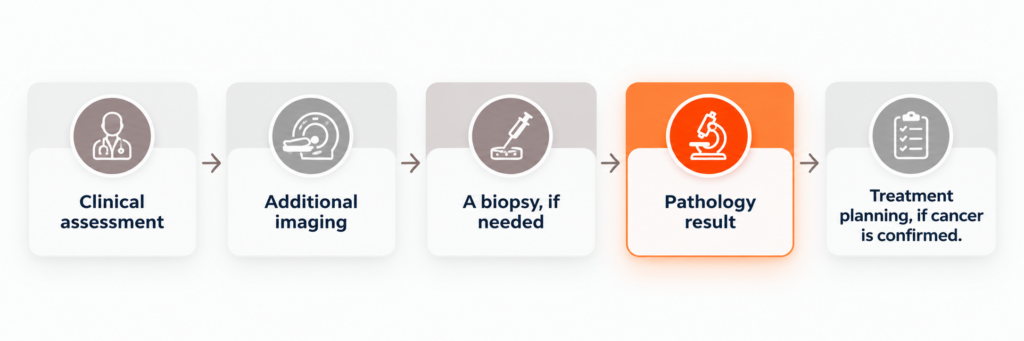
A biopsy means taking a small sample of breast tissue for laboratory analysis. It is the only way to confirm whether a suspicious change is cancer.

How To Support Someone with Breast Cancer

Breast cancer does not only affect the person who receives the diagnosis. Partners, family and friends have an important part to play, and support can be simple:

  • Encourage the people close to you not to ignore any change in the breast.
  • Offer to go with her to appointments and to help keep track of tests and follow-ups.
  • During treatment, practical help makes a real difference: cooking meals, arranging transport, looking after the children, helping with day-to-day tasks.
  • And sometimes the most valuable thing is simply to listen and to be there.

Can Men Get Breast Cancer Too? 

Breast health is not only a matter for women. Men can also develop breast cancer, although it is rare: about 1% of cases. A lump, a change in the nipple, discharge or any unexplained change in a man’s breast should also be assessed by a health professional.

Does Health Insurance Cover Mammograms in Mozambique?

Understanding your health insurance benefits can help you make informed decisions about preventative healthcare.

Depending on your Mediplus benefit option, you may have access to consultations, diagnostic examinations and other healthcare services through our network of service providers, subject to your plan’s benefits, limits and applicable rules.

When Are Mammograms Covered by Mediplus?


Mediplus provides mammogram cover for women aged 45 and older, subject to their benefit option and applicable rules. Women under the age of 45 may also qualify for cover if the examination is medically motivated by a doctor.

Before booking a mammogram or breast ultrasound, we recommend confirming your available benefits and whether pre-authorization is required.

Already a Mediplus Member?

Review your benefits and find a participating healthcare provider through our member services.

Considering Health Insurance?

Explore our Mediplus benefit options to learn more about the healthcare protection available to you and your family.

Frequently Asked Questions About Breast Cancer Screening

  1. Can you have breast cancer without feeling a lump? Yes. Breast cancer does not always cause a noticeable lump. Other warning signs may include changes in breast shape, skin dimpling, nipple discharge or changes to the nipple. Some breast cancers cause no noticeable symptoms and may only be detected through screening tests, such as mammograms. This is why regular breast awareness and appropriate medical screening are important.
  2. What happens if your mammogram shows an abnormal result? An abnormal mammogram does not necessarily mean you have breast cancer. Your doctor may recommend additional tests, such as another mammogram, a breast ultrasound or a biopsy, to investigate the findings. Many abnormal results are caused by non-cancerous conditions. However, it is important to complete any recommended follow-up examinations.
  3. What is the difference between a mammogram and a breast ultrasound? A mammogram uses low-dose X-rays to examine breast tissue and can detect changes that may not be felt during a physical examination. A breast ultrasound uses sound waves to create images of breast tissue and is often used to investigate a lump or an abnormal mammogram result. Your doctor will recommend the most appropriate examination based on your age, symptoms and medical history.
  4. Does health insurance in Mozambique cover mammograms? Mammogram cover depends on your health insurance provider and benefit option. At Mediplus, mammograms are covered for women aged 45 and older, subject to their benefit option and applicable rules. Women under 45 may also qualify for cover when the examination is medically motivated by a doctor.


Before booking your examination, we recommend confirming your available benefits and any applicable pre-authorization requirements with Mediplus.

Take Charge of Your Breast Health

Early awareness and timely medical advice are important steps towards protecting your health.

At Mediplus, we believe that understanding your healthcare options helps you make informed decisions for yourself and your family.

Already a Mediplus member? Check your available benefits and find a participating healthcare provider through our network.

Looking for health insurance in Mozambique? Explore our benefit options and discover how Mediplus can support your healthcare needs

Mediplus. Health First.