Health Allowance or Collective Plan: The Difference Nobody Explains, But Every Company Feels.
There is a conversation that happens in many Mozambican companies but rarely reaches a conclusion.
It starts when someone asks: should we offer a health allowance or take out a collective plan?
The most common answer is the allowance. It is simpler to implement, seems more flexible and, at first glance, solves the problem.
But does it?
What the allowance does well – and where it falls short.
The health allowance has real merits. It gives employees autonomy to choose where and how they receive care. It is straightforward to manage administratively. And it is perceived as a tangible benefit at the end of the month.
But it has consequences that are rarely discussed openly.
No traceability. The company does not know whether the allowance is being used for healthcare – or for something else entirely. There is no data. No reports. No way to measure the real impact on the team’s health.
No coverage guarantee. When an emergency arises in the middle of the night, this month’s allowance has already been spent. Or it was not enough to cover the real cost. The employee is left exposed at exactly the moment they need protection most.
No network. The employee navigates alone through a healthcare system that can be confusing, expensive and geographically limited. No guidance, no guaranteed access, no support.
“The difference between an allowance and a plan is not just financial. It is structural.”
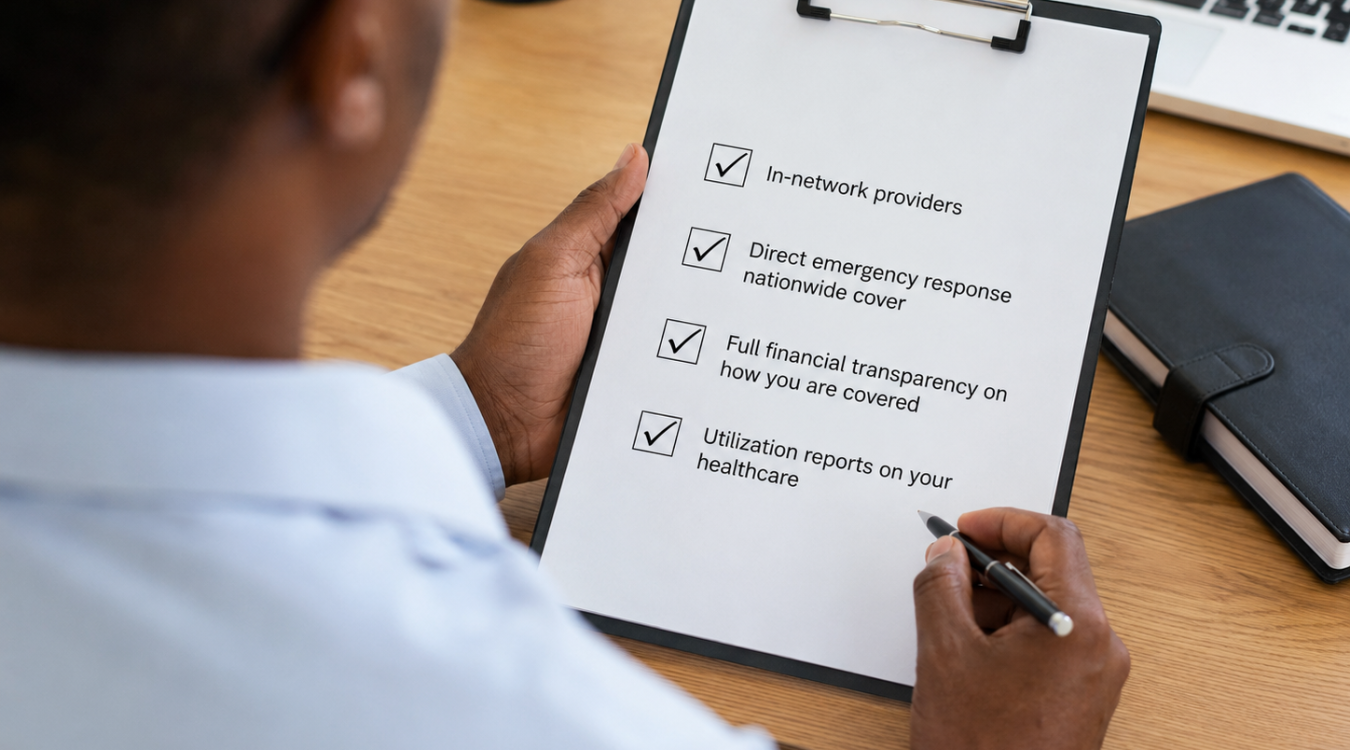
What a Mediplus collective plan offers
A collective plan is not simply an alternative to the allowance. It is a different architecture for thinking about health within the company.
Guaranteed coverage. The employee knows exactly what they have and when they can use it. No surprises. No last-minute calculations.
Immediate access to the provider network. In any emergency, anywhere in the country, the response is direct: present the card and be seen. No intermediaries, no delays.
Centralised management. The company has control and visibility. It knows what it is paying and what it is covering.
Utilisation reports available. Real data on how the team is using healthcare – information that enables better decisions in the future.
The question that remains
When a key employee has a medical emergency at two in the morning, what would you prefer to happen?
That they try to remember how much they have left in their allowance – or that they present their card and are seen immediately?
The answer to that question is, at its core, the difference between the two options.